Holders Without Hands: The Growing Crisis of Passive Token Ownership in America

There is a quiet contradiction at the heart of the modern blockchain movement. Across the United States, millions of individuals hold tokens issued by projects that proudly describe themselves as community-driven, decentralized, and participatory. Yet the vast majority of those same holders have never cast a governance vote, provided liquidity to a protocol, interacted with a DeFi platform, or engaged with any feature of the ecosystem their tokens theoretically represent.
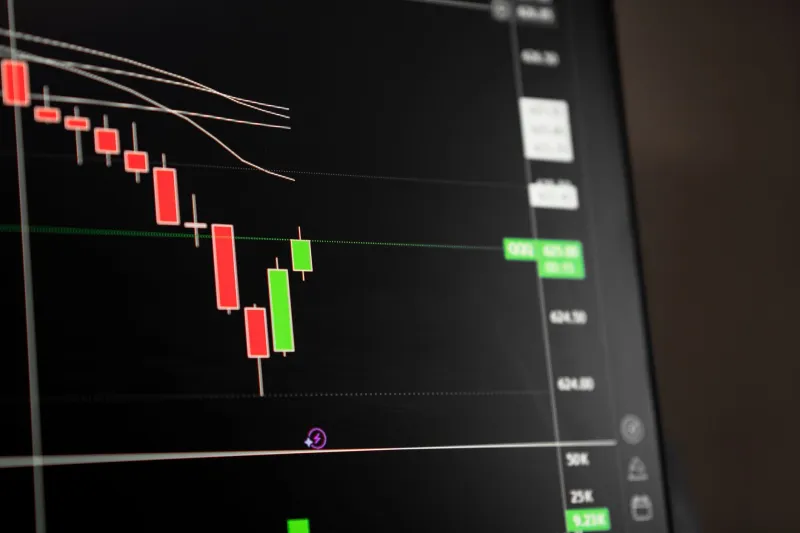
They hold. They watch price charts. They wait.
This is not a fringe behavior. According to multiple on-chain analytics firms, active wallet engagement rates across major Layer 1 and Layer 2 ecosystems routinely hover below 10 percent of total token holders. For some projects, the figure is considerably lower. The implication is stark: the communities these projects claim to represent are, in large part, spectators.
The Anatomy of a Passive Holder
Understanding why this pattern exists requires looking honestly at how most Americans first encounter token ownership. The dominant entry point remains centralized exchanges — platforms designed for buying and selling, not for protocol interaction. When a retail investor purchases a governance token or an ecosystem utility asset through a major exchange, that token typically sits in a custodial wallet. It never touches the underlying blockchain in any meaningful way.
The user experience gap is enormous. Interacting with a DeFi protocol, participating in a DAO vote, or bridging assets across chains demands a level of technical familiarity that the median American investor simply does not yet possess. Gas fees, wallet seed phrases, smart contract approvals, and slippage tolerances are not concepts that come naturally to someone accustomed to a brokerage account.
This is not a criticism of those investors. It is a structural observation about an industry that has, in many respects, outpaced its own onboarding infrastructure.
What the Data Actually Reveals
Token economists who study on-chain behavior have identified a consistent pattern they sometimes call the 90-9-1 rule — a rough adaptation of the classic internet participation inequality principle. Approximately 90 percent of token holders are entirely passive. Around 9 percent engage occasionally, perhaps claiming rewards or making a single governance vote per quarter. Fewer than 1 percent are genuinely active participants who use the ecosystem regularly and contribute meaningfully to its development.
This distribution has profound consequences. When a project points to its holder count as evidence of community strength, that metric may be masking a deeply hollow base. A token with 500,000 holders but only 4,000 active wallets is not a thriving ecosystem — it is a speculative asset with a marketing narrative attached.
For investors evaluating token projects, this distinction is critical. Projects that cannot demonstrate sustained on-chain activity are, in practical terms, dependent on sentiment rather than utility. When sentiment shifts — as it invariably does — there is no behavioral foundation to arrest the decline.
Why Projects Tolerate Passive Ownership
One might reasonably ask why blockchain projects would tolerate, or even encourage, this dynamic. The answer involves incentives that do not always align with long-term ecosystem health.
Token launches benefit from broad distribution. Wide holder counts create the appearance of decentralization, satisfy certain regulatory narratives, and generate liquidity during early trading periods. Projects have financial reasons to celebrate holder growth regardless of whether those holders ever interact with the protocol.
Some token economists argue that passive holders also serve a stabilizing function — large numbers of dormant wallets reduce circulating supply and can dampen volatility. This is true in narrow circumstances, but it does not constitute the engaged, self-governing community that most white papers promise.
The tension becomes most visible during governance crises. When a protocol faces a critical vote — on fee structures, treasury allocation, or security upgrades — participation rates frequently fail to reach quorum. Decisions that affect billions of dollars in assets are sometimes made by a few thousand wallets representing a tiny fraction of the nominal community.
The Long-Term Viability Question
For American investors with meaningful token allocations, the passive ownership problem is not merely philosophical. It has direct implications for the assets they hold.
Projects that cannot convert holders into users face a slow erosion of their value proposition. Competitors with more engaged communities will develop faster, attract better talent, and build more robust network effects. The token price may hold — or even rise — during bull markets when speculation dominates. But the structural weakness becomes visible during contractions, when the absence of genuine utility leaves no floor beneath speculative demand.
There is also a governance risk that deserves more attention than it typically receives. Passive majority ownership concentrates effective decision-making power among a small, active minority. This can lead to outcomes that serve the interests of insiders, large institutional holders, or developers — not the broader community the project claims to represent.
Finding Tokens That Actually Work
For investors seeking exposure to blockchain ecosystems with genuine engagement, several analytical approaches are worth incorporating into standard due diligence.
Daily active wallet counts are more informative than total holder figures. Look for projects where the ratio of active to total wallets trends upward over time, not just during price rallies.
Protocol revenue and fee generation indicate real usage. Ecosystems where users are paying for services — even modest amounts — demonstrate behavioral engagement that speculative holding does not.
Governance participation rates reveal how seriously a community takes its own decision-making. Projects that consistently achieve meaningful quorum on significant votes are demonstrating a level of civic engagement that passive-ownership projects cannot match.
Developer activity on public repositories, combined with the pace of ecosystem grant disbursements, signals whether the infrastructure for engagement is actively expanding.
None of these metrics are perfect. All can be gamed to varying degrees. But used together, they paint a far more honest picture of ecosystem health than token price or holder count alone.
Participation as a Competitive Advantage
There is an argument — one gaining traction among serious token economists — that active participation is not merely a nice-to-have quality. It is the single most durable competitive advantage an ecosystem can possess.
Networks where users are genuinely invested in outcomes, where governance reflects real deliberation, and where protocol features emerge from authentic community demand are structurally harder to displace than networks held together by speculation alone. The history of internet platforms offers instructive parallels: communities with high engagement outlast those built primarily on audience accumulation.
For American investors navigating a maturing token landscape, the question worth asking about any asset is not simply what it promises — but whether the people who hold it are actually showing up to build it.
The silent majority of passive holders may represent the largest untapped resource in the blockchain space. Or they may represent a warning sign that the community narrative was never quite real. Distinguishing between those two possibilities is, increasingly, the work of disciplined token investing.