When the Market Dries Up: Protecting Your Token Portfolio From Liquidity Collapse
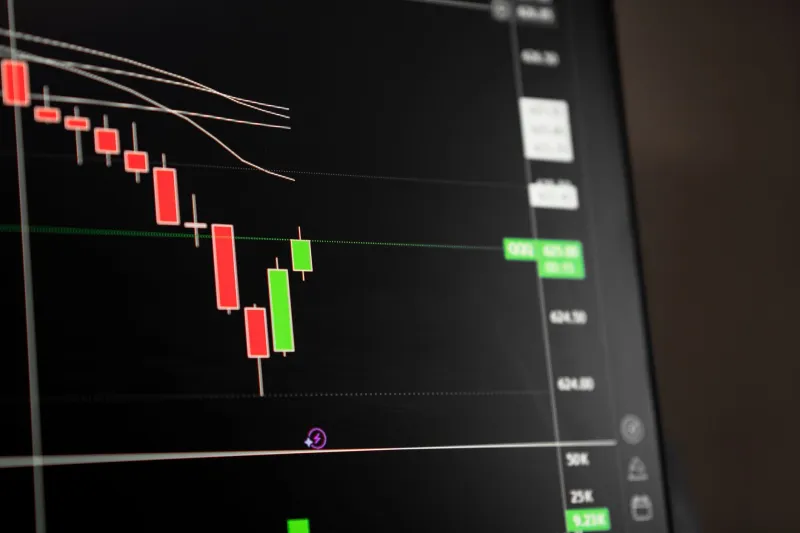
There is a particular kind of financial horror that has no clean analogy in traditional markets. You open your portfolio dashboard at 2:00 a.m. on a Tuesday, watch a token you've held for eighteen months plunge forty percent in under an hour, and discover — at the precise moment you attempt to sell — that there is effectively no one on the other side of the trade. The order book is a ghost town. The exchange is processing withdrawals at a crawl, if at all. The liquidity that appeared robust during calmer periods has evaporated entirely.
This is not a hypothetical. For thousands of American token holders, it has been lived experience. And yet, liquidity risk remains one of the least discussed vulnerabilities in retail crypto portfolios.
What Liquidity Actually Means in Token Markets
In traditional finance, liquidity describes how quickly and efficiently an asset can be converted to cash without meaningfully affecting its price. Blue-chip equities traded on the NYSE enjoy deep liquidity; a buyer or seller can transact millions of dollars worth of shares with minimal slippage. Most token markets, by contrast, operate on far thinner foundations.
Liquidity in the token ecosystem derives from several interconnected sources: centralized exchange order books, decentralized liquidity pools, market makers who actively quote bids and offers, and the aggregate depth of trading pairs available across platforms. When any one of these components falters — or when multiple components fail simultaneously — the consequences can be swift and severe.
The challenge for US token holders is that surface-level trading volume statistics can be profoundly misleading. A token reporting $50 million in daily volume may appear liquid, but if that volume is concentrated across two or three trading pairs on a single exchange, the actual depth available to a retail seller attempting to exit a meaningful position may be a fraction of what the headline number implies.
Case Studies in Catastrophic Illiquidity
The history of crypto markets is littered with instructive failures. The 2022 collapse of the FTX exchange stands as perhaps the most consequential liquidity crisis in the industry's short history. When withdrawal requests outpaced available assets, millions of American users found their holdings frozen — not because the tokens themselves had ceased to exist on-chain, but because the custodial infrastructure surrounding them had imploded. Liquidity was not merely constrained; it was structurally inaccessible.
Beyond exchange-level collapses, de-listing events present a quieter but equally dangerous form of liquidity risk. When a centralized exchange removes a token from its platform — whether due to regulatory pressure, low trading volume, or project abandonment — holders are typically given a narrow window to withdraw funds before access is permanently severed. Those who miss the notice, or who hold through a smaller regional exchange with less robust communication practices, can find themselves with tokens that are technically valid on-chain but practically impossible to convert through accessible channels.
Decentralized finance introduced its own variant of the problem through the phenomenon of liquidity pool drainage. During the DeFi boom of 2020 and 2021, numerous projects attracted significant capital into automated market maker pools, only for liquidity providers to withdraw en masse during downturns — a rational individual response that collectively rendered certain trading pairs functionally inoperable precisely when retail participants most needed an exit.
The Anatomy of a Liquidity Assessment
For US investors building or maintaining token portfolios, a structured approach to liquidity evaluation is not optional — it is foundational. The following framework provides a starting point.
Examine Order Book Depth, Not Just Volume
Raw trading volume is a lagging indicator and can be inflated through wash trading. A more meaningful signal is order book depth: the aggregate size of buy and sell orders sitting within one percent, two percent, and five percent of the current market price. Exchanges that publish real-time order book data allow investors to estimate how much capital they could realistically deploy or withdraw without materially moving the price against themselves.
Assess Exchange Concentration Risk
If the overwhelming majority of a token's trading volume is concentrated on one or two platforms, the holder is exposed to platform-specific risk that has nothing to do with the token's underlying fundamentals. Healthy tokens tend to trade meaningfully across multiple venues, providing redundant exit pathways in the event that one platform experiences technical failure, regulatory action, or insolvency.
Evaluate On-Chain Liquidity for DeFi-Adjacent Assets
For tokens with decentralized exchange presence, tools such as on-chain analytics platforms allow investors to examine the size and composition of liquidity pools directly. A pool with a small total value locked, or one dominated by a single large liquidity provider, is structurally fragile. The withdrawal of that single provider could collapse the pool's utility overnight.
Monitor Liquidity Trends Over Time
A snapshot assessment is insufficient. Liquidity conditions shift with market sentiment, and a token that appeared well-supported during a bull phase may see its order book thin dramatically as enthusiasm fades. Establishing a habit of periodic reassessment — particularly before adding meaningfully to a position — provides early warning of deteriorating conditions.
Structural Protections Worth Considering
Beyond assessment, US token holders can take practical steps to reduce their exposure to liquidity-driven losses.
Diversifying custody across multiple reputable platforms reduces the risk that a single exchange failure traps all accessible holdings simultaneously. Maintaining a portion of token assets in self-custodied wallets ensures that on-chain assets remain accessible even if centralized platforms become unavailable, though this approach shifts responsibility for security entirely to the individual.
Position sizing discipline — limiting any single illiquid token to a proportion of the overall portfolio that the investor could genuinely afford to lose access to temporarily — provides a behavioral buffer against panic-driven decisions during liquidity crunches. The investor who has allocated modestly to an illiquid token is in a fundamentally different psychological position than one who has concentrated heavily in it.
For those operating with larger allocations, limit orders placed at predetermined exit levels can help capture liquidity during brief moments of price recovery in otherwise distressed markets, avoiding the worst outcomes associated with market orders during thin trading conditions.
The Broader Lesson for Ecosystem Participants
Liquidity is not a peripheral concern for token investors — it is the infrastructure through which the value of any digital asset is expressed and realized. A token that cannot be converted at a fair price, at a time of the holder's choosing, is a token whose value exists only in theory.
The most resilient token ecosystems are those that attract genuine, distributed liquidity across multiple venues and market conditions — not merely during periods of speculative enthusiasm. For US investors evaluating where to commit capital within the broader digital asset landscape, liquidity depth deserves at least as much analytical attention as tokenomics, team credentials, or technological differentiation.
The market does not always provide an orderly exit. Building a portfolio that accounts for that reality is not pessimism — it is prudence.