Your Keys, Your Kingdom: The Real Cost of Financial Sovereignty in the Age of Digital Assets
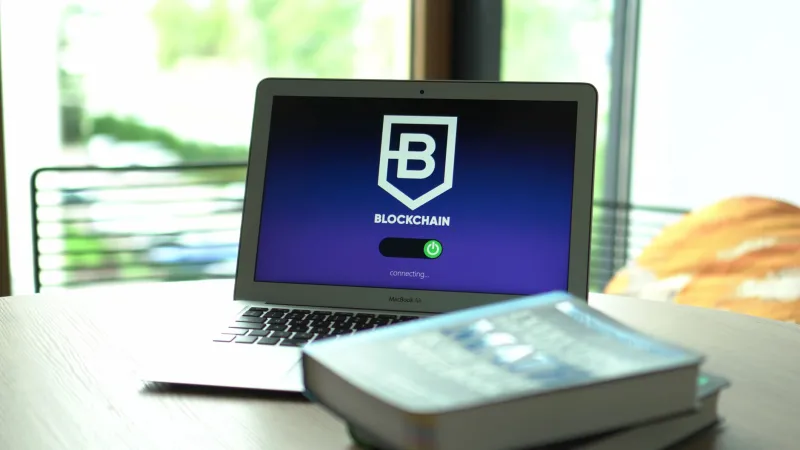
There is a phrase that circulates endlessly in cryptocurrency communities: not your keys, not your coins. It is blunt, almost confrontational, and yet it captures something genuinely important about how digital assets differ from every other financial instrument most Americans have ever held. A stock certificate, a savings account, a 401(k)—all of these exist within institutional frameworks that provide a safety net, however imperfect. A token stored in a self-custodied wallet exists within a framework of exactly one: you.
That singular responsibility is, depending on your perspective, either the most liberating or the most terrifying aspect of participating in the digital asset ecosystem. For a growing number of American token holders, it is both simultaneously.
What Custody Actually Means for Token Holders
In traditional finance, custody refers to an institution's legal responsibility for safeguarding a client's assets. When you deposit money at a bank, the bank becomes the custodian. When you hold securities through a brokerage, that firm—and ultimately the Depository Trust & Clearing Corporation—maintains custody on your behalf. You have a claim on the asset; the institution holds the asset itself.
Blockchain-based tokens invert this arrangement entirely. Ownership is established not by an institution's ledger but by cryptographic proof: specifically, by control of a private key. Whoever holds the private key controls the tokens associated with the corresponding address. There is no appeals process, no customer service line, and no FDIC insurance waiting in the background.
This creates two fundamentally different custody models that every American token investor must understand before committing meaningful capital.
Custodial wallets are offered by centralized exchanges and platforms. When you purchase tokens through a major exchange and leave them in your account, that platform holds your private keys. You hold a balance on their platform—a distinction that matters enormously when things go wrong.
Non-custodial wallets, by contrast, generate and store your private keys on a device or medium that only you control. Software wallets run on your phone or computer. Hardware wallets—physical devices specifically engineered for key storage—keep private keys offline and therefore out of reach of network-based attacks.
When Custodial Arrangements Fail
The argument for self-custody becomes considerably more persuasive when examined alongside the historical record of custodial failures. The collapse of FTX in late 2022 remains the most instructive recent example for American investors. Millions of users who believed their assets were securely held on the platform discovered that those assets had been commingled, misappropriated, and ultimately unavailable. The bankruptcy proceedings that followed offered cold comfort to retail investors watching their holdings become line items in a legal dispute.
FTX was not an isolated incident. Mt. Gox's implosion years earlier, the Celsius Network freeze, and the Voyager Digital bankruptcy all share a common thread: users who trusted custodial arrangements found themselves subject to the financial decisions—and failures—of institutions they had no visibility into.
For American investors accustomed to the protections of SIPC coverage on securities accounts or FDIC insurance on bank deposits, the absence of equivalent safeguards in the crypto custodial space represents a material and often underappreciated risk.
The Practical Challenges of Going It Alone
Acknowledging the risks of custodial arrangements does not make self-custody simple. In practice, managing your own private keys introduces a distinct category of risk that deserves honest examination.
Seed phrase security is the foundational challenge. Most non-custodial wallets generate a 12- or 24-word recovery phrase during setup. This phrase is the master key to your holdings. Lose it, and your assets are permanently inaccessible. Have it stolen or photographed, and your assets are permanently gone to someone else. There is no recovery mechanism, no forgotten-password flow, and no institution to call.
Americans who have grown up with password reset emails and two-factor authentication via SMS are often unprepared for the finality of seed phrase loss. The learning curve is not technical so much as psychological: it requires internalizing a form of personal accountability that modern digital life has largely conditioned us to outsource.
Inheritance and estate planning present an additional complication that relatively few self-custody advocates discuss openly. If you hold significant token assets in a non-custodial wallet and pass away without leaving your heirs clear access to your seed phrase, those assets effectively cease to exist. Traditional financial accounts have established legal mechanisms for inheritance. Self-custodied tokens do not.
Operational security demands ongoing vigilance. Hardware wallets must be purchased from reputable sources to avoid tampered devices. Software wallets must be kept updated. Phishing attacks targeting crypto holders have grown increasingly sophisticated, and a single moment of inattention—clicking a fraudulent link, connecting a wallet to a malicious site—can result in irreversible loss.
Building a Personal Custody Framework
The choice between custodial and non-custodial arrangements is not binary, and most experienced token holders ultimately adopt a tiered approach calibrated to their specific circumstances.
A practical framework for American investors might look something like this:
-
Active trading balances held on reputable, regulated exchanges where liquidity and convenience justify the custodial risk. Limiting this exposure to amounts you could absorb losing entirely is a reasonable discipline.
-
Core long-term holdings stored in a hardware wallet kept offline, with the seed phrase recorded on a durable medium—metal backup plates are commercially available and worth considering—and stored in a physically secure location such as a fireproof safe or safe deposit box.
-
Estate planning documentation that provides your designated heirs with legally structured access to recovery information without exposing that information to theft during your lifetime. Attorneys with cryptocurrency estate planning experience are increasingly available in major US markets.
Your allocation across these tiers should reflect your technical comfort level, the size of your holdings, and your honest assessment of how much operational security discipline you can realistically sustain.
Sovereignty Is Not Free
The American cultural tradition of self-reliance makes self-custody philosophically appealing. The idea that you alone control your financial assets—that no institution can freeze them, confiscate them, or lose them through mismanagement—resonates with something deep in the national character.
But sovereignty of any kind carries costs. Political sovereignty requires defense. Personal sovereignty requires judgment. Financial sovereignty in the digital asset space requires education, discipline, and an ongoing willingness to bear responsibility for outcomes that institutional arrangements would otherwise absorb on your behalf.
At TatuToken, we believe that understanding this tradeoff clearly is a prerequisite for meaningful participation in the token ecosystem. Self-custody is not simply a technical choice—it is a philosophical commitment to ownership in its most complete form. Making that commitment wisely means understanding exactly what you are taking on before the private key is in your hands.
The kingdom is yours. The question worth sitting with is whether you are prepared to govern it.