Owning Your Future: How American Crypto Holders Are Replacing Trading Habits With Token Sovereignty
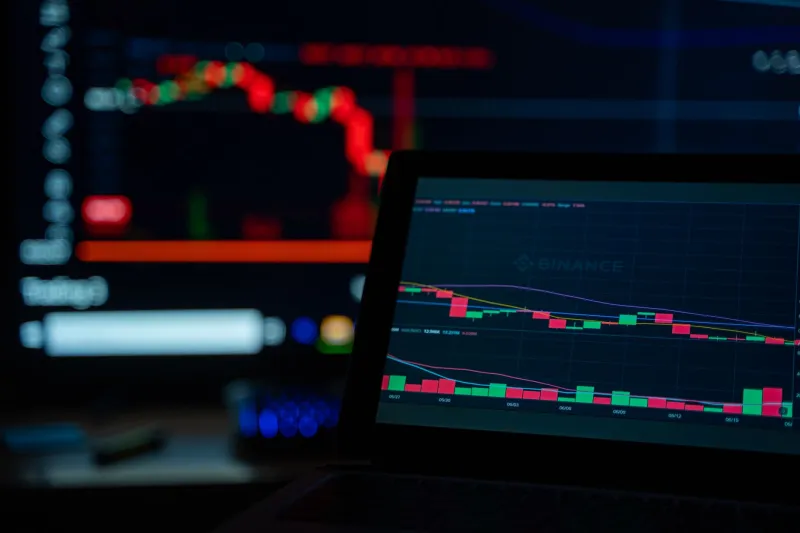
For years, the dominant narrative surrounding cryptocurrency in the United States has been one of rapid gains, speculative bets, and the relentless pursuit of the next breakout asset. Trading dashboards flickered with red and green candles. Social media threads buzzed with price predictions. And for many retail participants, crypto felt less like an investment and more like a high-stakes game.
That narrative is changing.
Across the country, a quieter but increasingly influential cohort of digital asset holders is abandoning the trading mindset in favor of something more deliberate: long-term token ownership structured around personal values, ecosystem alignment, and economic self-determination. They are not simply holding assets — they are building what many in the space now call a personal token portfolio, a curated collection of digital assets intended to reflect both financial goals and a broader vision of participation in the decentralized economy.
The Limits of the Trading Mentality
The appeal of active crypto trading is understandable. Volatile markets create opportunities that traditional equities rarely match, and the 24/7 nature of digital asset exchanges means the action never stops. But the psychological and financial toll of constant trading has become increasingly apparent to those who have lived through multiple market cycles.
Research consistently shows that retail traders, across asset classes, tend to underperform buy-and-hold strategies over meaningful time horizons. In crypto, where emotional volatility compounds market volatility, this dynamic is amplified. The investor who sold Bitcoin at $20,000 during the 2018 downturn, only to watch it surpass $60,000 three years later, understands this lesson acutely.
Beyond performance metrics, there is a deeper issue: trading as a primary strategy positions the investor as a spectator rather than a participant. You are responding to the ecosystem rather than owning a stake within it.
What Token Sovereignty Actually Looks Like
The concept of token sovereignty begins with a straightforward premise: rather than asking which token will rise next week, the question becomes which ecosystems do I want to be part of for the next decade?
This reframe has practical consequences. Investors operating under a sovereignty model conduct due diligence not on price charts but on protocol fundamentals — governance structures, developer activity, community engagement, and real-world utility. They prioritize tokens that confer genuine rights: voting participation, revenue sharing, access to platform features, or staking rewards tied to ecosystem growth.
Consider the approach taken by Marcus D., a software engineer in Austin, Texas, who restructured his crypto holdings in 2022 after experiencing significant losses from reactive trading. Rather than abandoning digital assets, he spent three months auditing his portfolio philosophy. He identified five blockchain ecosystems whose missions aligned with his professional background and personal values — decentralized infrastructure, creator monetization, and supply chain transparency — and allocated accordingly. He has not executed a speculative trade since.
"I stopped thinking about price and started thinking about ownership," Marcus explained in a community forum post that circulated widely among like-minded investors. "These tokens represent a stake in systems I actually believe in. The volatility doesn't disappear, but it stops being the point."
Diversification With Intention
A well-constructed personal token portfolio does not mean holding every prominent asset in the market. It means selecting a manageable number of positions — typically between five and fifteen — that collectively represent diverse sectors of the emerging digital economy while remaining coherent as a unified strategy.
Practitioners of this approach often segment their holdings into categories: infrastructure tokens (layer-one and layer-two blockchains), utility tokens tied to specific platforms or services, governance tokens that confer decision-making power, and ecosystem tokens connected to sectors such as decentralized finance, digital media, or physical-world asset tokenization.
The allocation percentages vary by individual risk tolerance and time horizon, but the underlying logic is consistent: each position should be justifiable on its own merits, not merely as a hedge against another holding.
Sarah K., a financial advisor based in Denver who began integrating digital assets into her personal planning in 2021, describes her portfolio as a "conviction map." Each token she holds corresponds to a documented thesis about where value will accumulate over a multi-year period. She revisits those theses quarterly — not to react to price movements, but to assess whether the underlying conditions that justified the position remain intact.
Ecosystem Alignment as a Wealth-Building Framework
The phrase owning the ecosystem captures something important about this investment philosophy. In the traditional financial world, most retail investors are consumers of financial products created by institutions. They buy shares in companies they have no voice in governing, managed through intermediaries who take a cut at every step.
Token ownership, at its most meaningful, inverts this relationship. Holding governance tokens in a protocol can mean voting on treasury allocations. Staking tokens in a creator economy platform can mean earning a portion of the fees generated by that platform's activity. Participating in a decentralized autonomous organization (DAO) can mean shaping the roadmap of a protocol that may one day be used by millions.
This is not passive wealth accumulation. It is active participation in the construction of new economic infrastructure — and the financial returns, when they materialize, are a byproduct of that participation rather than the sole objective.
The Long View in a Short-Attention-Span Market
Adopting a sovereignty mindset requires resisting the considerable gravitational pull of short-term market sentiment. Crypto Twitter, Discord servers, and financial media all generate enormous noise, and distinguishing signal from that noise demands discipline.
Practical habits among long-term token holders include limiting exposure to real-time price tracking, setting predetermined review intervals rather than monitoring markets daily, and documenting investment theses in writing before establishing any position. Some investors maintain a personal investment charter — a brief document outlining their principles, time horizon, and the conditions under which they would exit a position — to serve as an anchor during periods of market stress.
The goal is not to ignore the market but to relate to it differently: as context rather than instruction.
A Structural Shift Worth Watching
The movement toward token sovereignty is still nascent, and it would be premature to declare the trading era of crypto over. Speculation will always attract participants, and short-term price action will continue to dominate headlines. But the infrastructure for long-term, values-aligned token ownership is maturing rapidly — with better tooling, clearer regulatory frameworks emerging from Washington, and a growing body of educational resources helping ordinary Americans understand what it means to genuinely participate in a blockchain ecosystem.
For those willing to ask a different question — not what can I profit from but what do I want to own — the digital asset landscape offers a genuinely novel opportunity: the chance to build personal economic sovereignty, one token at a time.